

How Money Will Next Move in Anime
By 2035, the most valuable anime company outside Japan won’t own any IP at all.

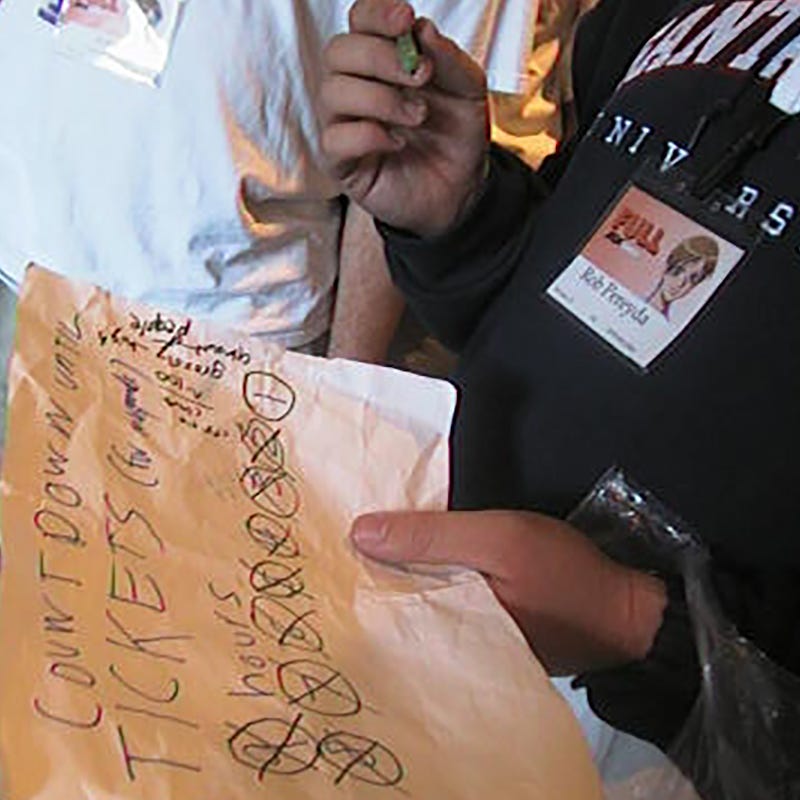
Long before I joined the anime industry as Crunchyroll employee #9 (or even knew what licensing was!), I was just a kid fresh out of high school singing anime karaoke all night in line at Anime Expo waiting for masquerade tickets. The year was 2000 and the venue was the Disneyland Hotel (seriously). I started the line before 11pm the night before, and the group of otaku misfits we formed quickly found ourselves singing anime karaoke from someone’s boom box with burned CD-Rs and romaji printouts of popular anime songs. We may have been camping on the floor like this was our Woodstock, but we had an amazing time, with the night culminating in everyone singing Country Road together from Whisper of the Heart (in an oddly Whisper of the Heart moment).
Does this make me an anime geezer? Yes. But it’s also a moment I draw on when I think about friction in fandom.
Anime Is a Mature Market in Only One Country
Anime fans have evolved past what the anime industry offers. This is not because the industry is failing. Journalists regularly proclaiming “Anime is bigger than ever!” from mountaintops is as true as the Sun rising in the East. The industry that serves Tokyo isn’t built to serve the world. The fans are already here.
In Tokyo, engaging with anime requires near-zero friction. Anime is ambient. It’s everywhere (and by anime here, I’m extending the term to the broader ACG superfandom: anime, comics/manga, and games). A salaryman after work can pick up a Chiikawa keychain at the station kiosk and not think of himself as an otaku. He’s just buying a thing.
Everywhere else, there’s a last-mile problem. Even with all the companies licensing anime, the ones filling the booths at Licensing Expo every year, there still isn’t enough local good stuff. Getting authentic merchandise from Japan means forwarders, long shipping windows, and decrepit websites that haven’t been updated in over a decade. Or you give up and buy a bootleg. Cheap, free shipping, a few days. What’s more appealing to the American anime fan?
Is anime a subculture, or is it a global standard? I’m starting to think it’s the latter. Anime is Spice that flows through broken pipes.
Global Anime Fans Want the Industry to (Shut Up and) Take Their Money
Let’s look at actual fan behavior. They use Buyee to make Mercari purchases of rare anime goods. They pay big shipping fees to buy direct from Japanese websites. They travel thousands of miles to AnimeJapan because not even the monster anime conventions in their home countries come close to what they offer. I estimate turnstile attendance of anime conventions in North America alone will well surpass 2.5 million admissions this year, growing at roughly 12% CAGR. These are people actively participating in anime and spending money. The industry isn’t built to capture them.
Globally, the anime market exceeded $25B in 2024 (according to the Association of Japanese Animations). While overseas has permanently overtaken Japan in total revenue, Japan generates far and away the most revenue on a per person basis. I estimate that an engaged anime fan in Japan monetizes at roughly 3.3x the rate of an engaged fan in the US. But does this mean Japanese fans love anime more than three times as much as American fans? No! It simply means the infrastructure in Japan lets them spend that much more.
Which is why global fans turn to bootleg goods out of necessity. Piracy exists because official channels can’t take their money (it’s not like fans are actively out to stick it to creators). Your favorite offshore cheap shopping app with a cool logo is providing what the industry won’t. Make it easy to find out what’s available and buy it, and then the bootleg market collapses.
Put together, this is billions of dollars of unmet fan demand, waiting for someone to build the infrastructure that captures it. On Roblox, for example, unauthorized anime games are constantly changing hands based on monthly revenue multipliers with the bet that even if the DMCA hammer comes, it will have recouped in time. This shows me that people with capital aren’t going to wait for licensors to figure things out if there is profit to be made now.
On the size of the market, I have a bolder prediction than most analysts: I predict that the global anime market will hit $100B by 2035, roughly 50% higher than the consensus. I see that growth coming from outside Japan, through channels that don’t exist today. Global anime fans are ready to spend. But the industry isn’t there to (shut up and) take their money.
Tokyo Already Built the Thing
Walk around Japan — especially Tokyo — and you’ll see frictionless anime infrastructure everywhere. Countless shops for anime goods, strong e-commerce, and fast cheap domestic shipping. Combined with a population concentrated in Kanto with cheap and reliable public transportation, if someone wants to get something, they can easily get it.
I remember in the late 2000s, in my Crunchyroll days, organizing anisong karaoke gatherings (sometimes all night) at the Big Echo on Showa Dori in Akihabara. Beforehand we’d pregame at a little bar nearby that other industry folks would hit up, too. It had a statue of a hot dog out front that is now gone (RIP).
And things have come further since then. In Akihabara, there are themed karaoke rooms at Pasella. Ichiban Kuji shops. A new wave of game centers with premium prizes. TCG shops with all sorts of card games. In Nakano Broadway, there is still a stronger independent streak, with consignment shops specialized in hyper-specific fandoms (even vintage McNuggets Happy Meal toys). Attending events like AnimeJapan’s public days, Comiket, and Tokyo Game Show is like watching rivers of overflowing salmon swim upstream to their origins. Japan, the one mature market for anime, has built anime at scale, making frictionless fandom possible.
As stated earlier, anime convention attendance in North America is exploding. We see the fan demand. But when fans go to these conventions, we’re still seeing a gap: it’s typically either filled with massive corporate booths with limited sales offerings or with bootleg vendors packing anime goods (sadly, most anime conventions look the other way at bootlegs since these vendors pay big fees). Again, fans are left with the choice to either not get anything or to get the bootleg thing that’s there in front of them, all because the infrastructure isn’t there.
Anime is at scale in Japan right now, so this is more than a portent. We know that fans will respond. What we have to figure out is what the right infrastructure looks like outside Japan.
A Model Built for the Culture Convenience Club
Ask around the industry today, and there are few companies left which adore the production committee (seisaku iinkai) system where a consortium of companies pool money, expertise, and then bring the title to market. This was made for a time when revenues were spread across mediums like domestic TV broadcast, home video (including the lucrative Tsutaya DVD rental market), merchandise, and a small part, overseas (all lumped together). The system was built to spread risk and worked in Japan’s consensus-driven business culture. But as overseas revenue began to increase and as streaming (even in Japan) became meaningful, the way these got built deviated from their original intent. Nowadays, you find consortiums dominated by a single investor trying to get as much of the pie as possible on hit titles. The big problem is that anything overseas is all lumped together in one bucket, which makes it an afterthought.
Whether a licensor is granting “all rights” to Crunchyroll or another company or taking a “some rights” approach, if overseas is just a cell in an Excel spreadsheet, is that a good thing? How would they have the mindshare or resources to support their partners? It doesn’t work.
The upstream concentration of source material reinforces this system. Whether a publisher simply licenses the IP to a committee (and they thereby benefit from higher manga sales) or whether they invest into the pie themselves as a producer for more upside, they are the top of an integrated pipeline that fuels the entire ecosystem.
But you can’t blame the publishers for what’s going on. The singular mission of powerful editors at these publishers is to be in service to the authors. The system itself begets hits, so the problem is further downstream.
The frictionless fandom I enjoy in Japan doesn’t exist anywhere else. There are sprinkles of frictionless moments around the world, but not in the concentration and scale that Japan has. No Nakano Broadway. No anime-themed karaoke rooms. There are local licensees (many with whom I work) making great product, but it’s still not enough to feed demand. The entire overseas market is still below its potential because it is an afterthought.
The pattern I see and that any of my peers who have done these deals will recognize is that a great many licensors want as much money as possible in minimum guarantees to recoup investments, but they also want to build brands. Always. Under the current production committee-overseas licensing regime, these two desires pull in opposite directions. The few licensors who have the vision (like those that bet on us at Crunchyroll in the early days) have reaped rewards by building brands with rising tides these past two decades. The ones who can’t get away from MGs are still chasing MGs. Fragmentation is the foundation of the system. But it doesn’t have to stay that way.
The Neo-Progenitor of Frictionless Fandom
The wall I just described is exactly what we ran into building Crunchyroll, except we didn’t have the language back then. Nobody was calling it frictionless fandom back then. But that’s what we were, the neo-progenitor of it, the first version of a model that hadn’t been named yet.
What we proved at Crunchyroll was one thing: fans show up when you remove friction. They come to watch the content they love, and they experience Absolute Ease. The concept is like aqueducts bringing water to early farmers: once the people have it, they can’t imagine going back.
At Crunchyroll, we solved content distribution. But this was just the start of what fandom needs. What we need now is the expression of fandom itself: the merch, the experiences, the participation. Infrastructure be damned.
How Anime Fandom Reaches the Point of Absolute Ease
When friction approaches zero, fandom hits Absolute Ease. In Japan, it works because of four elements:
Curation
Experience
Specialization
Scale
All four show up everywhere you experience anime in Japan, and they’ll show up differently outside Japan as innovators build for the next generation.
Curation is a blend of context and hospitality, like when an anime clerk in Ikebukuro knows exactly what you mean when you’re looking for a saucy alternate costume of a popular character (no judgement!). Or like when I meet business partners at Kanda Flux and they put together exactly what I need for my guests (bonus that my name’s on the wall). Curation is giving fans what they need when they need it.
Experience is that feeling of gaining proximity to the content beyond just watching it or buying merchandise. Everything from collaboration cafes to voice actor concerts to AnimeJapan to Virtual Shibuya’s anime activations is a way of bringing people closer.
Specialization is doing one thing extremely well, like the little boutiques in Nakano Broadway, whether for anime cels, vinyl records, jackets, or really anything. This hyper-specificity is what makes these kinds of stores so enjoyable (and as an aside, it’s the same thing we talked about at Netflix that can get a show greenlit).
Scale is anime being everywhere so you can just reach out and touch it with your fingertips. It took Japan decades to build the capital and rights ecosystem, but now the scale is here. Predictable revenue and shared upside have built something in Japan where scale itself reduces friction.
The four elements correspond to what operators outside Japan are starting to build.
Curation: Content Creators, Live Shopping, and Chatbots
Curation blends context and hospitality to help fans decide. It shows up for fans differently based on their need states.
Outside Japan, the strongest curation today is coming through content creators, who have built these parasocial relationships with fans based on trust. I’ve had the pleasure of working with some of the biggest anime names out there (thanks, GeeXPlus/Kadokawa!), but what’s fascinating is that the anime share of the influencer marketing industry — estimated by DigitalApplied at an astronomically high $32B — is still just a tiny fraction of what it could be. By my estimate, the anime content creator space is monetizing at less than 10% of its potential based on the current size of the broader influencer marketing market. That means 10x the business for creators and 10x (or more) product moving through the brands working with them.
Live shopping is exploding, projected to hit $55B this year according to Awisee. The big difference between traditional content creation (YouTube, Twitch) and live shopping (TikTok Shop, WhatNot) is the user intent headed into a platform. Purchasing decisions happen on the former. Actual purchases happen on the latter (they’re built for commerce). Live shopping gives you the curation, the context, and a little hospitality, all at the exact moment you’re ready to buy.
But what about when content creators and live shopping channels hit their limits of reach? This is where chatbots, the emerging third category, come in. To better understand what they solve, imagine this: whether you’re walking into Animate in Akihabara or going straight to Amazon to search, if you have an idea in your head of what you already want, you’re probably going to be fine. But strip away that user intent, and you run into a problem. How many times have you opened up Netflix and just browsed, looking for something to watch, and just given up because there’s nothing to watch? This is me on Friday nights! Because we didn’t have the intention of what to watch (what we called choosing at Netflix). Now imagine talking with a chatbot who gleans a few facts about you and surfaces what you might like. This solves for anything in the catalog that a fan would have wanted to find but couldn’t.
Curation outside Japan isn’t going to be one size fits all. It’ll definitely be interactive. Sometimes it’ll be human, sometimes it’ll be machine, and often it’ll be both. And it’ll be the difference between capturing fan demand and watching it slip away.
Disclosure: I’m building in this space at Henshin AI and am an investor in Moescape AI, and work or have worked with a number of other companies in the space.
Experience: In-Person Moments and Virtual Hangouts
Experience is when fans get to participate in the anime/manga/game that they love. Outside Japan, it shows up in two ways.
In-person experiences are a replication and sometimes local adaptation of what has worked in Japan. The One Piece Cafe in Las Vegas and Los Angeles makes Japanese licensors smile. It’s a high quality extension of the Japan model, well received in market (and delicious, too). And on the retail side, John and his team at Patencio Development set up partnerships in retail at places like Hot Topic and Box Lunch that were never possible before. Instead of just the top 5 anime or a few evergreen titles, fans are now getting access to the new stuff they might never have seen at retail this early on. Spencer and Adrien at ETC took a different approach with deploying the Hololive integration at Dodger Stadium — the first deep integration of VTubers with a Western sporting event. That was more adaptation than replication, but I see all three of these patterns working. Fans want immersion and proximity to the characters and worlds they love.
On the virtual side, what’s happening outside and inside Japan is quite different. Whereas in Japan you might have a one-time event activation in Virtual Shibuya as part of a marketing campaign (e.g. Ghost in the Shell), outside Japan I see huge opportunities for anime to show up in virtual worlds like Roblox, Fortnite, and more. This isn’t more prevalent yet because UGC gaming isn’t well understood in Japan, and the industry’s scale outside Japan is still being built. Part of why fans gravitate to these worlds so much is that Roblox and Fortnite are the new social hangouts, the place to be (rather than a shopping mall). For people who grew up on UGC games during COVID, why not have anime experiences be virtual, too?
Experience outside Japan will look different from the Japanese model. The desire to be inside the worlds fans love stays the same.
Specialization: Single-Category D2C Boutiques
Specialization is doing one thing exceptionally well. In Japan, this lives as in-person boutiques. Outside Japan, it manifests as D2C (direct to consumer).
Instead of the kind of Nakano Broadway-style charming micro-boutiques we see in Japan, what’s happening overseas is single-category D2C websites that sell one thing. One such company I had the pleasure of working with throughout 2024 was Displate as they entered the anime market with premium metal posters. Working together, we repositioned the website offering and onboarded licensor after licensor. Today, Displate is a regular exhibitor at Anime Expo and carries hit IPs like Dragon Ball, Demon Slayer, and many more.
These single-category D2C anime businesses lend themselves well to both performance marketing (paid) and anime community channels (organic). When one really takes off, you see it. More brands like Out of Love, an automotive anime D2C (yes, I have the “Waifu Prison” from them), are building their own specialized slice of the anime industry. And I would be remiss not to mention Boomslank and their fresh take on anime fashion (I’ve lost count of how many shirts I’ve ordered from them over the years).
Curation paired with disciplined marketing (paid and organic) is what makes specialization scale outside Japan.
Scale: Anime as a Cash Accelerator for Private Equity
D2C boutiques can only scale so much on their own. Just like mobile apps, D2C needs growth capital. The galapagos-ization of Japan’s domestic industry has made anime scale a fingertip away inside Japan, but the same model doesn’t export. Anime is growing from different vectors overseas, and the catalyst for scale outside Japan is different too: private equity. And the way PE is doing this isn’t what most analysts assume.
In the run up to this year’s Licensing Expo, marketing materials trumpeted what industry insiders already know: put licensed IP on a piece of merchandise, and it sells 4x faster with 30% higher margins. The power of IP (and especially anime) is real, which is why I see anime as a cash accelerator for private equity. The opportunity isn’t really about licensing fees being too low. The real problem is that most of the licensing world still abstracts marketing from rights deals when they really should be intertwined. The licensor grants the rights, collects the MGs, and figures someone downstream will build the demand. Many licensors are still running the Pre-Peak Anime playbook, assuming titles won’t get drowned out and will just market themselves, leaving licensees to fend for themselves or never reach their potential.
What Paul and Sameer have built through POW! Interactive is a prime exemplar of combining private equity and anime. They bought Jasco Games, added capital and operating expertise, then bought more IP and scaled. Now UVS has a thriving community of players and fans of different Japanese IPs who can play out their dream battles in TCG form. And beyond anime, they’re publishing Riftbound, a little card game for the League of Legends IP.
POW! is the most visible example, but not the only one. Other groups in both the US and Japan are looking at acquisition targets where they can bring serious capital and operating expertise to underbuilt anime IPs. The recent Seven Seas acquisition by Media Do (brokered by Ku Worldwide for $80M) is an example of the recent heat in the space. While that one was strategic rather than PE, the deal flow is real.
Private equity has a complicated reputation. In anime, with the right investors and operating partners, the model is already producing results that don’t need defending.
The Four Elements at a Glance
Who Builds This
The operators who command one or more of the four elements (while also balancing the Japanese and global sides) are the ones who win. They share one thing: they already know the pain points and work within them. Each is building one piece of Absolute Ease outside Japan.
Yet even with knowledge, achievement, and experience, the best operators never take any of it for granted. If you get into “approvals hell” on a product, the contractual “10 business days” is meaningless if you ever want to work in the industry again. The art of nemawashi (getting pre-approval behind the scenes) takes deals a long way.
Just as important as dealmaking is one area too few Japanese IP owners think about: go-to-market. GTM as a job title is one of the hottest things in Silicon Valley, but in anime, it’s badly overlooked. Global and Japanese behavior patterns get oversimplified or confused. Yes, gamers who lean back and watch anime are the biggest segment of fans in the United States, but the most successful campaigns don’t start by only marketing to anime gamers. People like Miles at White Box Entertainment get this. Undervaluing audience insights, or worse, doing them the wrong way, can doom a project before it’s even started.
In my early Crunchyroll days, we knew the production committee wasn’t our enemy (it was just a system to work within). The real enemy was friction.
My 2035 prediction that the most valuable anime company outside Japan won’t own any IP isn’t some random guess. It happens when operators command the four elements while balancing the Japanese and global sides. The most valuable anime company outside Japan will be defined by how it enables Absolute Ease.
The Era of Absolute Ease
Anime spent decades becoming the cultural language of a generation. The infrastructure is about to catch up.
Inside Japan, fans have been living in Absolute Ease for decades. Anime is at their fingertips.
Outside Japan, frictional fandom is the opposing agent of Absolute Ease. It was almost 26 years ago that I camped out on the floor at Anime Expo to grab masquerade tickets because there was no other way to participate. But the next generation of fans won’t have to. Curation will help them find what they need. Experience will immerse them in anime. Specialization will speak to every fan’s taste, no matter how specific. Scale will put anime at their fingertips.
Anime is bigger than ever. And it’s about to be easier than ever to access.
Welcome to the Era of Absolute Ease.
loved this breakdown!! the idea of frictionless fandom is going to stick with me - so applicable to scaling franchises in general tbh. brilliant. thank you !!
interesting Rob !